Research
Quarterly prints, plus research between them. Every figure traces to a dated, checksummed archive entry.
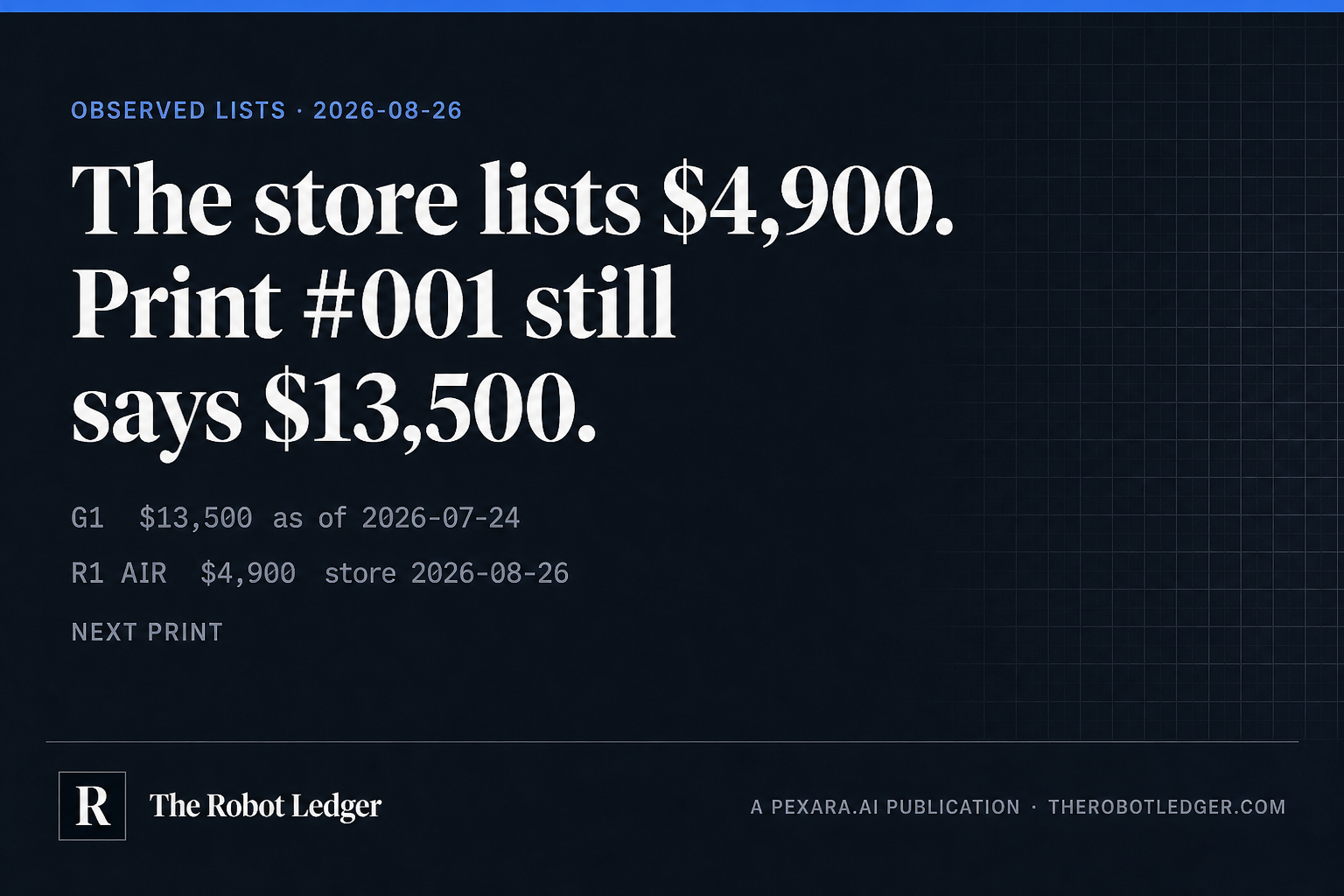
The Official Store Lists a Humanoid at $4,900. Print #001 Still Says $13,500.
Print #001's humanoid frontier is $13,500, the Unitree G1 list, as of 2026-07-24. Unitree's own humanoid page and U.S. shop now list R1 AIR at $4,900 and R1 at $5,900. The print is not edited. Both numbers stay on the record.
Three Robot Programs Made the News This Quarter. None Made the Index.
A production count of zero heading into Tesla's Q2-2026 earnings call. A $152 million Series A for a London startup named Humanoid, with Bosch on manufacturing. Four new models from AGIBOT at WAIC, aimed at export. What none of the three has: a shipping unit with an observed price. In our ledger, that is the only line that counts — and it is still blank for all three.

100,000 Humanoids in 2026, or 40,000? Both Numbers Are in the Same Sentence.
The '100,000 humanoids in 2026' figure travels as if it were a shipment count. It is a forecast — and in the very report where it appears, a Deutsche Bank analyst puts her own expectation at roughly 40,000. Two production forecasts for one year, sixty thousand units apart, in a single sentence. We price neither. We price shipped machines at observed prices, and by that count 2026 is still blank.

The Used-Robot Market Isn't a Black Box. It's Split by Who's Selling.
Used industrial arms are usually described as uniformly opaque — call for a quote, no prices anywhere. Against the receipts that's wrong. Where one broker controls the listing, 100% of prices are gated behind a phone call. On an open marketplace of independent sellers, 40% of sampled listings carry a real dollar asking price — one Fanuc arm at $19,999, another at $99,000, a delta robot at $9,000. Opacity isn't a property of used robots. It's a property of the selling structure.

The Chinese-Robot Ban Isn't a Proposal. As of July 28, It's on the Books.
The reporting says the administration is 'considering' restrictions on Chinese-made robots. Against the receipts, that framing is already out of date. On 2026-07-28 the FCC added 'advanced robotic devices' to its Covered List — new humanoid and quadruped models are now barred from U.S. import and sale authorization. It is the same instrument the Commission used against DJI drones seven months earlier, the fourth China-driven hardware action in this shape in 13 months. The rule never says 'China.' It doesn't have to.
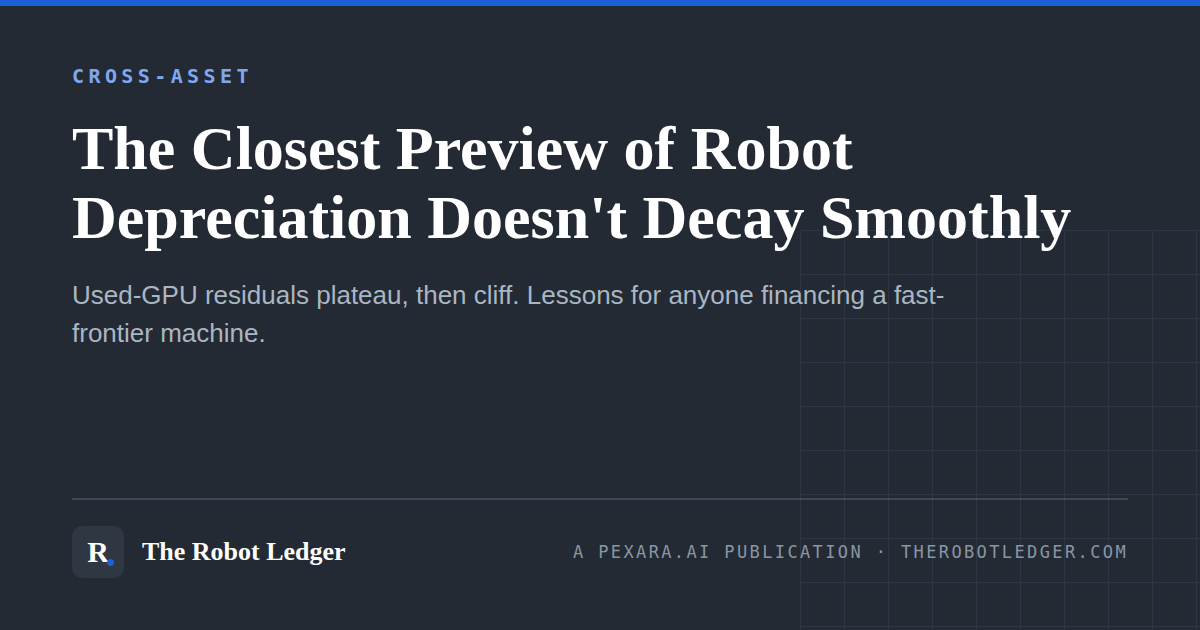
The Closest Preview of Robot Depreciation Is the Used-GPU Market. It Doesn't Decay Smoothly.
Robots are a fast-frontier asset with almost no public resale prices. The nearest asset that does have them — used data-center GPUs — shows depreciation that plateaus for over a year, then cliffs when a later generation frees up supply, and can even sit above list price under scarcity. Anyone financing a robot on a smooth-decay assumption should look at these receipts first.
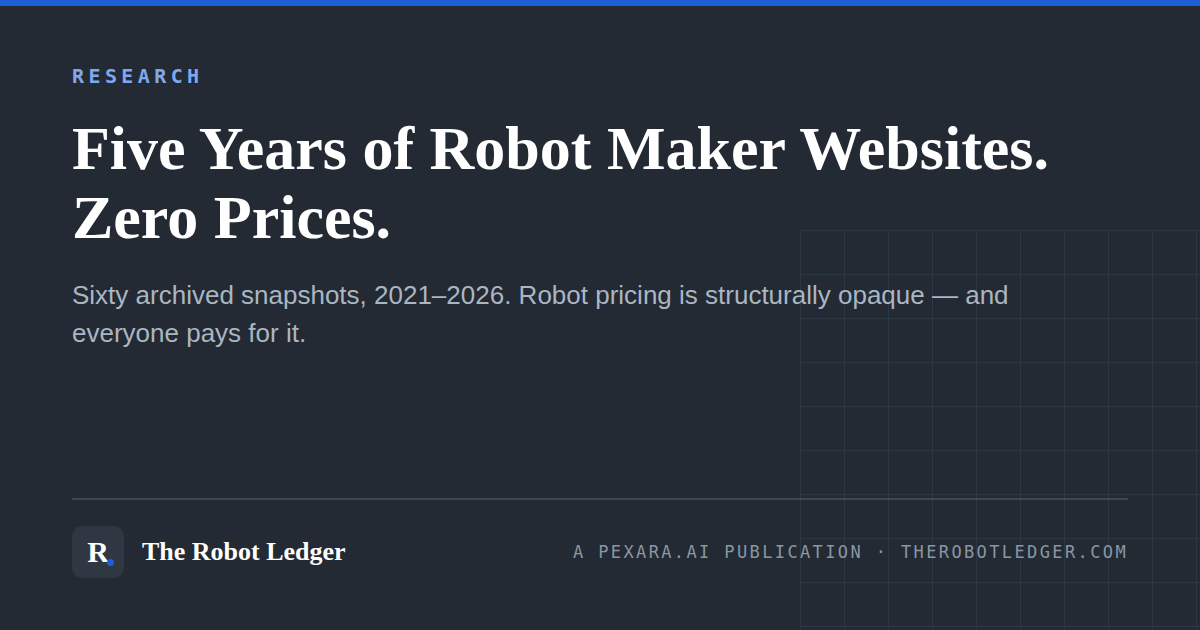
We Read Five Years of Robot Manufacturer Websites. We Found Zero Prices.
Sixty archived snapshots of six major robot makers' public pages, July 2021 through July 2026. Number of U.S. dollar prices published in that entire span: zero. Robot pricing isn't discreet — it's structurally opaque, and everyone in the market pays for it.
Introducing the Robot Frontier Price Index: What Robots Actually Cost, On the Record
The Robot Ledger launches with a simple question nobody can currently answer from public data: what does it cost to buy into robotics today? Print #001 covers humanoids, quadrupeds, and autonomous tractors — every figure traced to an archived, dated source.